Last updated on October 22nd, 2026 at 07:05 pm
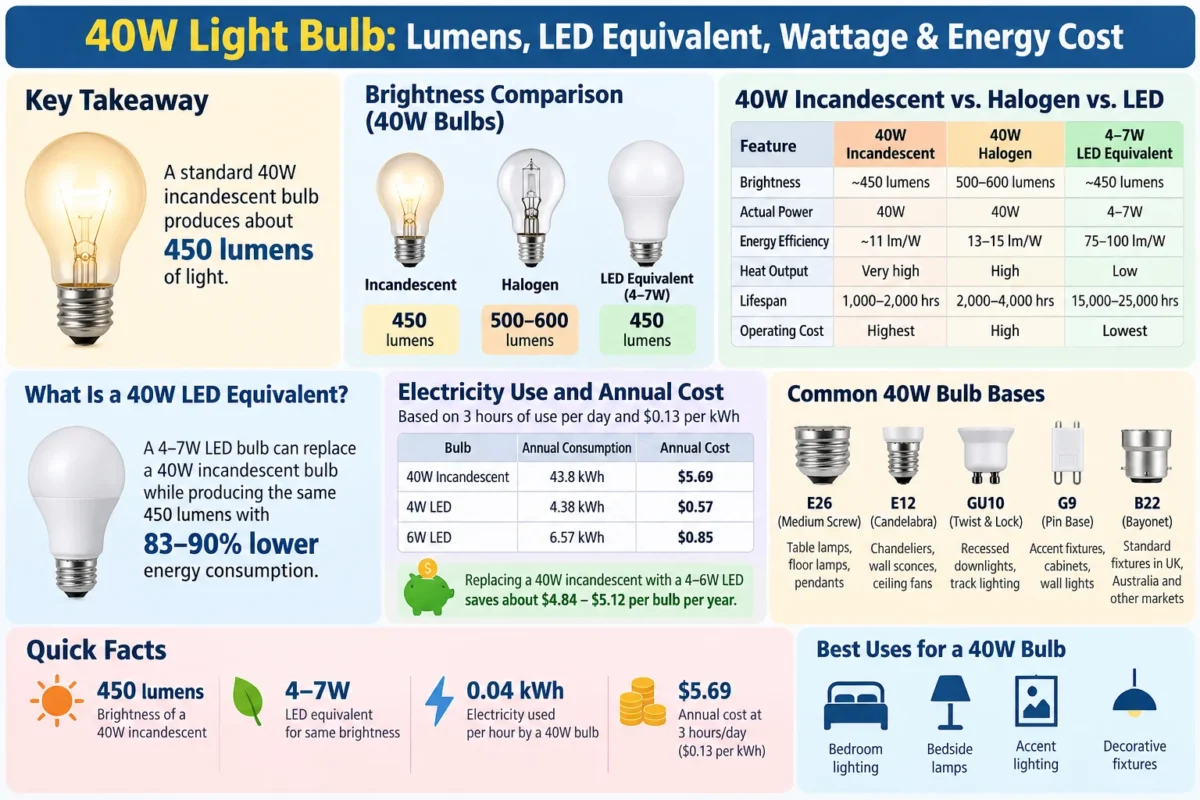
A 40W light bulb typically produces around 450 lumens when it uses incandescent technology. If you want the same brightness with lower electricity costs, a 4–7W LED is a practical replacement for most standard 40W incandescent bulbs.
Understanding lumens, actual wattage, bulb bases, and operating costs helps you choose the right replacement for your home or business. This guide explains how bright a 40W bulb is, which LED equivalent to buy, and how much electricity each option uses.
How Bright Is a 40W Light Bulb?
A standard 40W incandescent bulb produces approximately 450 lumens. This light output is suitable for bedside lamps, decorative fixtures, accent lighting, and other applications where moderate illumination is sufficient.
But more importantly, brightness varies by bulb technology. An LED designed to replace a 40W incandescent can produce similar light using substantially less electricity. A genuine 40W LED, however, consumes 40 watts and may produce several thousand lumens, depending on its efficiency and design.
For accurate comparisons, check the lumen rating rather than relying on wattage alone.
What Is a 40W LED Equivalent?
A 4–7W LED bulb is generally suitable for replacing a 40W incandescent bulb when it produces approximately 450 lumens.
The LED consumes roughly 83–90% less electricity than the incandescent bulb, depending on its actual wattage.
When purchasing a replacement, check these specifications:
- Brightness: Look for approximately 450 lumens.
- Power consumption: A typical replacement uses 4–7 watts.
- Color temperature: Choose 2700K–3000K for warm, comfortable lighting or a cooler color temperature for applications requiring a different appearance.
- Base compatibility: Match the bulb base to your existing fixture.
- Dimming compatibility: Confirm that the LED supports dimming if your fixture uses a dimmer switch.
Remember that “40W equivalent” describes the approximate incandescent brightness, not the LED’s actual electricity consumption.
How Many Lumens Does a 40W Bulb Produce?
Lumens measure the amount of visible light a bulb emits, while watts measure the electrical power it consumes.
For standard incandescent-equivalent bulbs, approximately 450 lumens is the benchmark for a 40W incandescent replacement.
| Bulb Type | Typical Light Output | Actual Power |
| Incandescent | 450 lumens | 40W |
| Halogen | Varies by model; often around 450–600 lumens | 40W |
| LED replacement | Around 450 lumens | Approximately |
These figures are illustrative rather than universal specifications. Always use the manufacturer’s published lumen output and wattage when comparing individual products.
40W Incandescent vs. Halogen vs. LED
Different bulb technologies convert electricity into light with different levels of efficiency.
| Feature | 40W incandescent | 40W halogen | 4–7W LED equivalent |
| Typical brightness | About 450 lumens | Model dependent | Around 450 lumens |
| Electricity consumed | 40W | 40W | 4 to 7 W |
| Energy efficiency | Low | Higher than conventional incandescent in many applications | Generally higher |
| Heat generation | High | High | Generally lower |
| Typical rated lifespan | About 1,000 hours | Often 2,000–4,000 hours | Often 15,000–25,000 hours |
| Operating cost | Highest for comparable brightness | High | Lowest for comparable brightness |
Note: Lifespan and efficiency vary by product. LED performance also depends on operating temperature, fixture design, and whether the bulb is suitable for enclosed fixtures.
How Much Electricity Does a 40W Bulb Use?
A 40W bulb consumes 0.04 kilowatt-hours (kWh) for every hour it operates. The following example assumes the bulb operates for three hours daily throughout the year and electricity costs $0.13 per kWh.
Annual Electricity Consumption:
40W incandescent:
0.04 kW × 3 hours × 365 days = 43.8 kWh per year.
4W LED:
0.004 kW × 3 hours × 365 days = 4.38 kWh per year.
6W LED:
0.006 kW × 3 hours × 365 days = 6.57 kWh per year.
Annual Electricity Cost Comparison
| Type of Bulb | Annual Power Consumption | Annual Cost at $0.13/kWh |
| 40W incandescent | 43.8 kWh | $5.69 |
| 4W LED | 4.38 kWh | $0.57 |
| 6W LED | 6.57 kWh | $0.85 |
Replacing a 40W incandescent with a 4–6W LED saves approximately $4.84–$5.12 per bulb annually under these assumptions.
For 20 bulbs operating on the same schedule, the estimated annual electricity savings increase to approximately $97–$102.
Your actual savings will depend on your electricity rate, daily usage, and the wattage of the LED you select. These figures cover electricity costs only, not purchase or replacement costs.
You can also explore: U.S. energy saving initiatives.
40W Bulb Base and Size
The 40W rating describes electrical power consumption, not the physical dimensions or base of a bulb. Two 40W bulbs may have different shapes, sizes, and connection types.
Common bulb bases include:
| Base Type | Common Applications |
| E26 medium screw | Standard table lamps, floor lamps, and many household fixtures in the US |
| E12 candelabra screw | Chandeliers, decorative sconces, and some ceiling fans |
| GU10 twist-and-lock | Track lighting and compatible recessed spotlights |
| G9 pin base | Compact decorative and specialty fixtures |
| B22 bayonet | Fixtures commonly found in the UK and other markets using bayonet fittings |
Always verify the existing bulb’s base, dimensions, voltage, and fixture requirements before buying a replacement. Not every base type is available in every wattage or bulb shape.
FAQs
1. Can a 40W bulb be used in a 20W fixture?
Only if the bulb complies with the fixture’s maximum wattage rating and other installation requirements. A 40W incandescent must not be installed in a fixture rated for a maximum of 20W.
A 4–7W LED that provides equivalent brightness may be suitable because it uses less power. However, check the fixture manufacturer’s instructions, including any restrictions for enclosed fixtures.
2. What LED replaces a 40W bulb?
A 4–7W LED producing approximately 450 lumens is a suitable starting point for replacing a standard 40W incandescent bulb. Check the actual lumen rating and base compatibility before purchasing.
3. Is a 40W bulb bright enough for a bedroom?
A 450-lumen bulb can work well in a bedside lamp or for accent lighting. Whether it provides enough light for an entire bedroom depends on the room’s size, fixture placement, wall colors, and the number of bulbs installed.
4. Can I replace a 40W bulb with a lower-wattage LED?
Yes. A compatible 4–7W LED can replace a 40W incandescent when it provides the desired light output and meets the fixture’s requirements. This reduces electricity consumption without necessarily reducing brightness.
5. Does a 40W LED use the same electricity as a 40W incandescent?
Yes, both draw approximately 40 watts while operating at their rated power. However, a 40W LED can produce substantially more light because LED technology is generally more efficient. A 40W-equivalent LED is different: it typically consumes only around 4–7 watts.
6. How much does it cost to run a 40W bulb for one year?
At three hours of daily use and an electricity rate of $0.13 per kWh, a 40W bulb costs approximately $5.69 annually. Actual costs depend on electricity prices and operating hours.
Choose the Right Bulb for Your Lighting Needs
When replacing a 40W incandescent bulb, focus on lumen output, actual wattage, base compatibility, and fixture requirements. A suitable LED replacement can deliver similar brightness while reducing electricity consumption and replacement frequency.
Use lighting electricity cost calculators to estimate electricity costs, compare LED energy savings, and determine the most efficient lighting option for your space.

